Tankless water heater installation: what to expect
A tankless installation is a licensed job whose scope depends on the exact unit and your house: gas line, vent, condensate drain or electrical service may all change. Expect an itemized quote, permits where required, and a handover with the manual and the warranty registration.

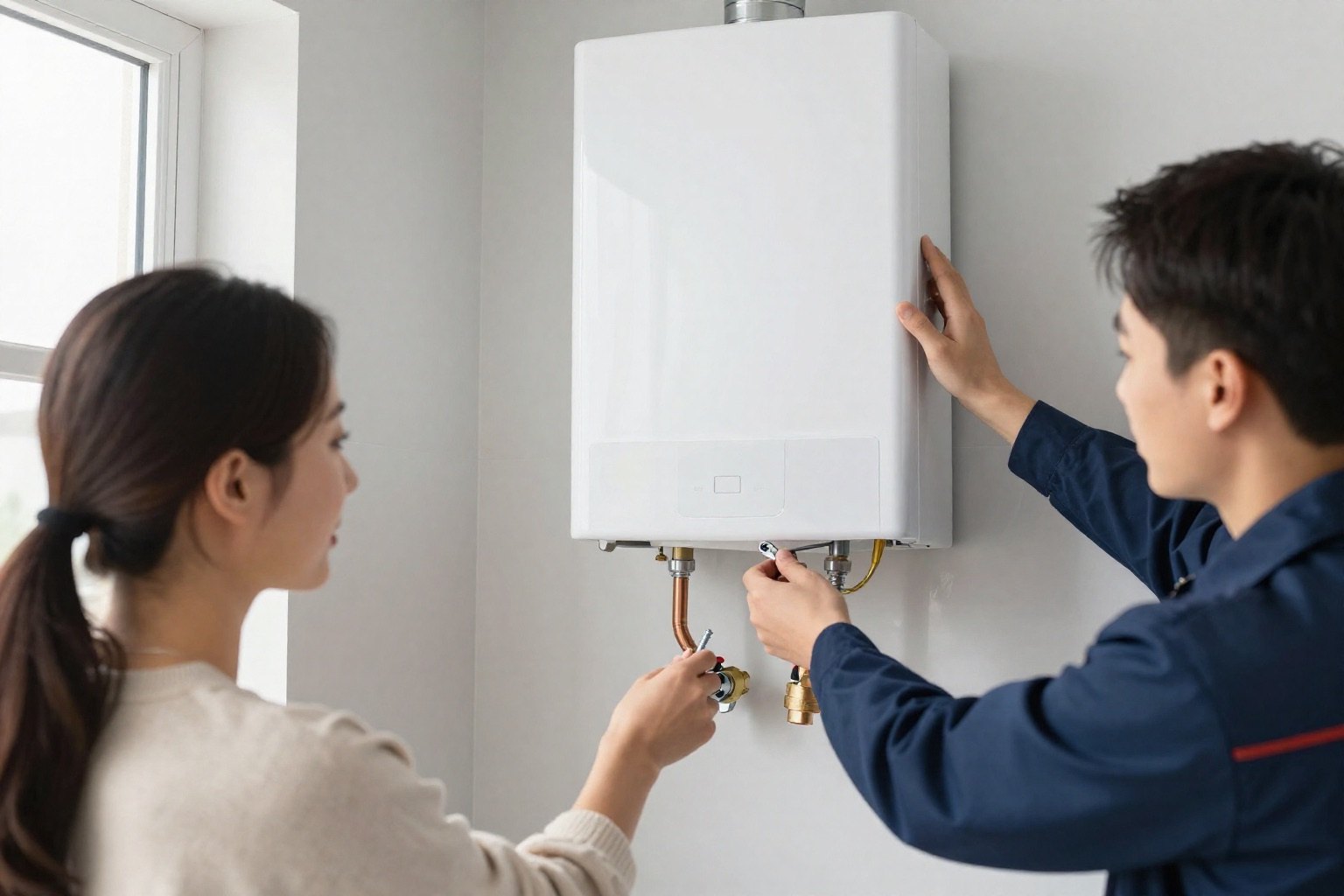
Installing a tankless water heater usually means more than swapping the old tank: a gas unit often needs a bigger gas line, a new vent and, if it is condensing, a condensate drain, while an electric unit may need new 240 V circuits and a panel upgrade. Expect a licensed plumber or gas fitter (and an electrician for electric units), a permit in most places, and a written quote that lists every one of those items.
Affiliate disclosureAs an Amazon Associate we earn from qualifying purchases made through links on this page. Commissions never change our ratings.
What a tankless installation involves
| Item | Gas unit | Electric unit |
|---|---|---|
| Location and mounting | Wall-mounted, level, with the clearances in the manual | Wall-mounted, upright, connections at the bottom |
| Fuel or power | Gas line often upsized: a ¾-inch branch where a tank used ½-inch | 2–4 dedicated 240 V circuits, 75–150 A in total |
| Venting | New direct vent through wall or roof; old vent lines not reused | None |
| Condensate | Drain and neutraliser for condensing units | None |
| Water connections | Isolation (service) valves for flushing, pressure relief valve | Same, ¾-inch NPT on whole-house models |
| Power for controls | A 120 V outlet on the listings that state one | Part of the main circuits |
| Permit and inspection | Usually required | Usually required |
The checklist comes from the Building America guide and the A. O. Smith installation guide; local code always has the last word.
The gas line, vent and condensate
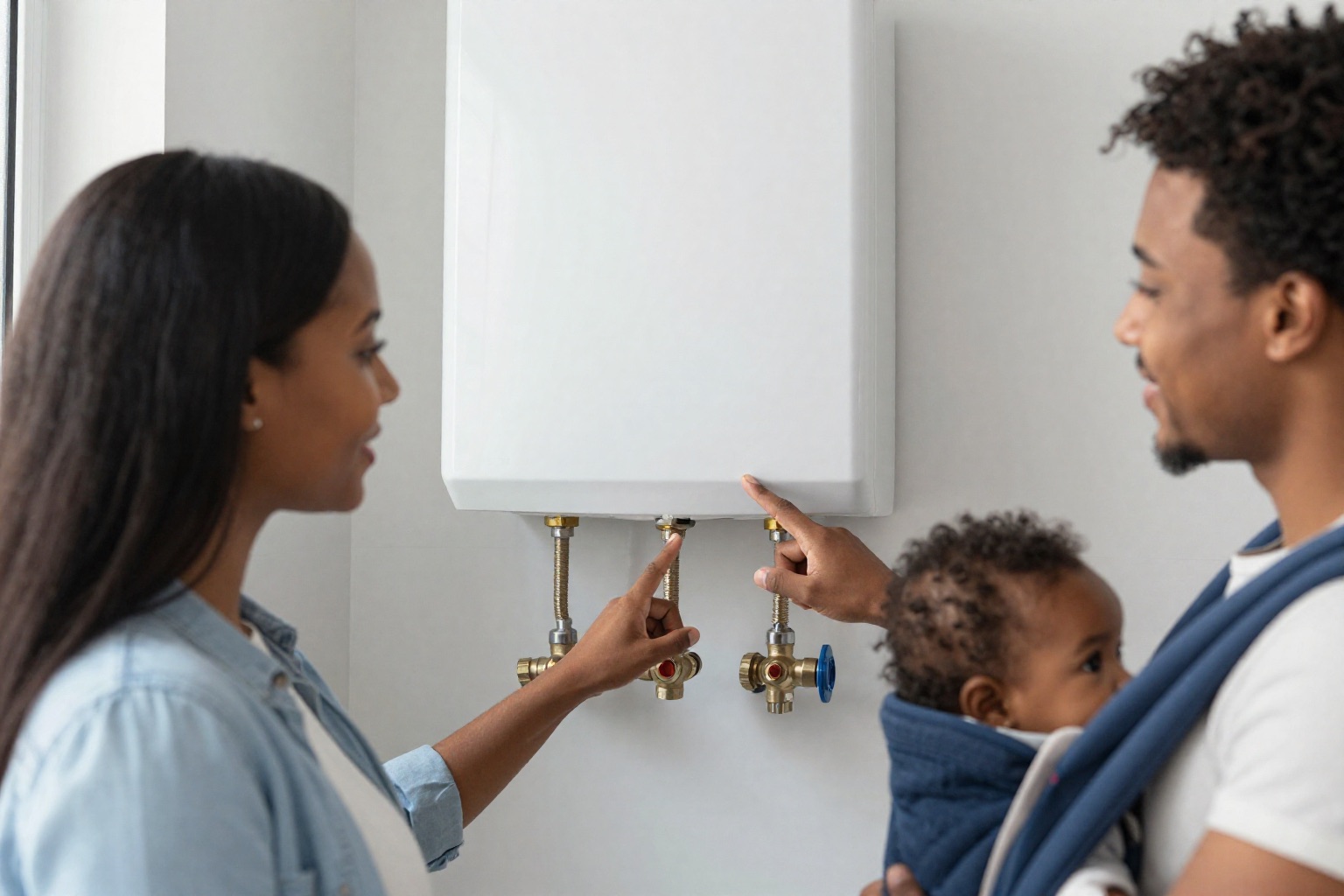
This is where most surprises hide. A tankless burner may need 199,900 BTU/h where a typical tank used 40,000, so the gas line from the manifold often has to grow, and the Building America guide notes that sometimes even the line from the street has to be upsized to serve the heater and every other gas appliance at once. The available gas size and pressure can decide whether a gas tankless heater is possible at all.
The vent is new as well. A. O. Smith tells installers not to reuse old vent lines, to keep vent runs short, to keep the exhaust away from air intakes and, with concentric vents, to fit a condensate trap. Condensing units add a drain for slightly acidic condensate; a neutraliser is recommended. Our condensing guide explains the venting difference.
Electric installs: circuits and panel
Electric tankless heaters skip the vent, but not the work. A. O. Smith notes they draw more amps than electric tanks and need a bigger breaker and larger service wire. Rheem’s 18 kW RTEX needs two 40 A double-pole breakers and a 150 A service; its 27 kW model three 40 A breakers and a 200 A service, and Rheem warns that panel upgrades are often required when replacing an electric tank. Our electrical requirements guide has the full table.
Choosing the installer and the quote
The Department of Energy recommends a qualified plumbing and heating contractor and gives a short checklist:
- Get cost estimates in writing, for the exact model.
- Ask for references.
- Check the company with your local Better Business Bureau.
- Make sure the contractor pulls the local permit and knows the local codes.
Ask what the quote includes: gas line work, vent kit, condensate neutraliser, service valves, electrical work, removal of the old tank, and the first flush. Rinnai notes that improper installation can void its warranty and recommends an installer trained on its products. If you install it yourself, the DOE says to consult the manufacturer and check local permits first.
What to expect on the day
- The old tank is drained and disconnected, then removed.
- The new unit is mounted and connected to water, with service valves for later flushing.
- Gas line and vent are installed or upsized for gas units; circuits are run for electric units.
- The installer fills the unit and purges the air before switching it on, then checks for leaks and, on gas units, combustion and venting.
- Inspection, if your area requires one, may follow on another day.
For prices, see our guide to tankless installation cost.
Which of our rated products help with the install
- MIZUDO 199,000 BTU Natural Gas Indoor (rated 9.2/10): our top indoor natural gas heater, 199,000 BTU/h, so ask for the gas line to be sized for it.
- BHVALCON 3/4" Valve Kit with Gas Lines (rated 7.4/10): a ¾-inch service valve kit with relief valve and gas connector, the isolation valves the Building America guide recommends.
- Chromex Flush Kit, Concentrated Vinegar (rated 7.4/10): a flush kit for the first and later descaling.
Our rated picks
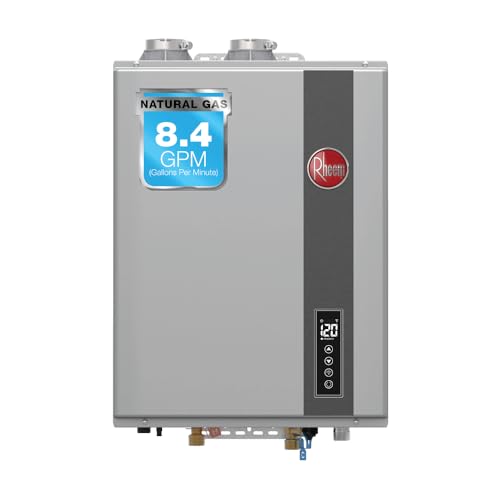
The three best-rated models of our ranking Best Tankless Water Heaters in 2026, from the buyer review record and the listed specs.


Product images: Amazon listings
Rankings for this question
Common questions
What is involved in installing a tankless water heater?
Mounting the unit, connecting water with service valves, and either a gas line plus vent (and a condensate drain for condensing units) or dedicated 240 V circuits for electric units, usually with a permit and inspection.
Do you need a bigger gas line for a tankless water heater?
Often yes. A tankless burner can need 199,900 BTU/h against about 40,000 for a tank, so a ¾-inch branch line or a larger supply may be needed depending on the other gas appliances and the pipe length.
Can you install a tankless water heater yourself?
The DOE recommends a qualified contractor because of gas, combustion and code issues; if you do it yourself, consult the manufacturer and get the local permit. Improper installation can void the warranty.
What are the requirements for a tankless water heater?
The right gas supply and vent, or enough electrical capacity, a location with the manual’s clearances, service valves for flushing, a condensate drain for condensing units and the permit your area requires.
Sources
- PNNL Building America Solution Center (U.S. DOE) — Gas-Fired Tankless Water Heaters (consulted Nov 2026)
- A. O. Smith — Tankless Water Heater Installation Guide (consulted Nov 2026)
- U.S. Department of Energy, Energy Saver (archived June 30, 2026) — Tankless or Demand-Type Water Heaters (consulted Nov 2026)
- Rheem — Professional Classic RTEX tankless electric water heaters, specification sheet (PDF) (consulted Nov 2026)
- Rinnai America — SENSEI residential tankless water heater limited warranty (PDF) (consulted Nov 2026)