Condensing vs non-condensing tankless water heaters: the difference
A condensing tankless heater adds a second heat exchanger that recovers heat from the exhaust, so it is more efficient but needs a condensate drain and plastic or stainless venting. A non-condensing unit is simpler to install and can still be the sensible buy for a given house.

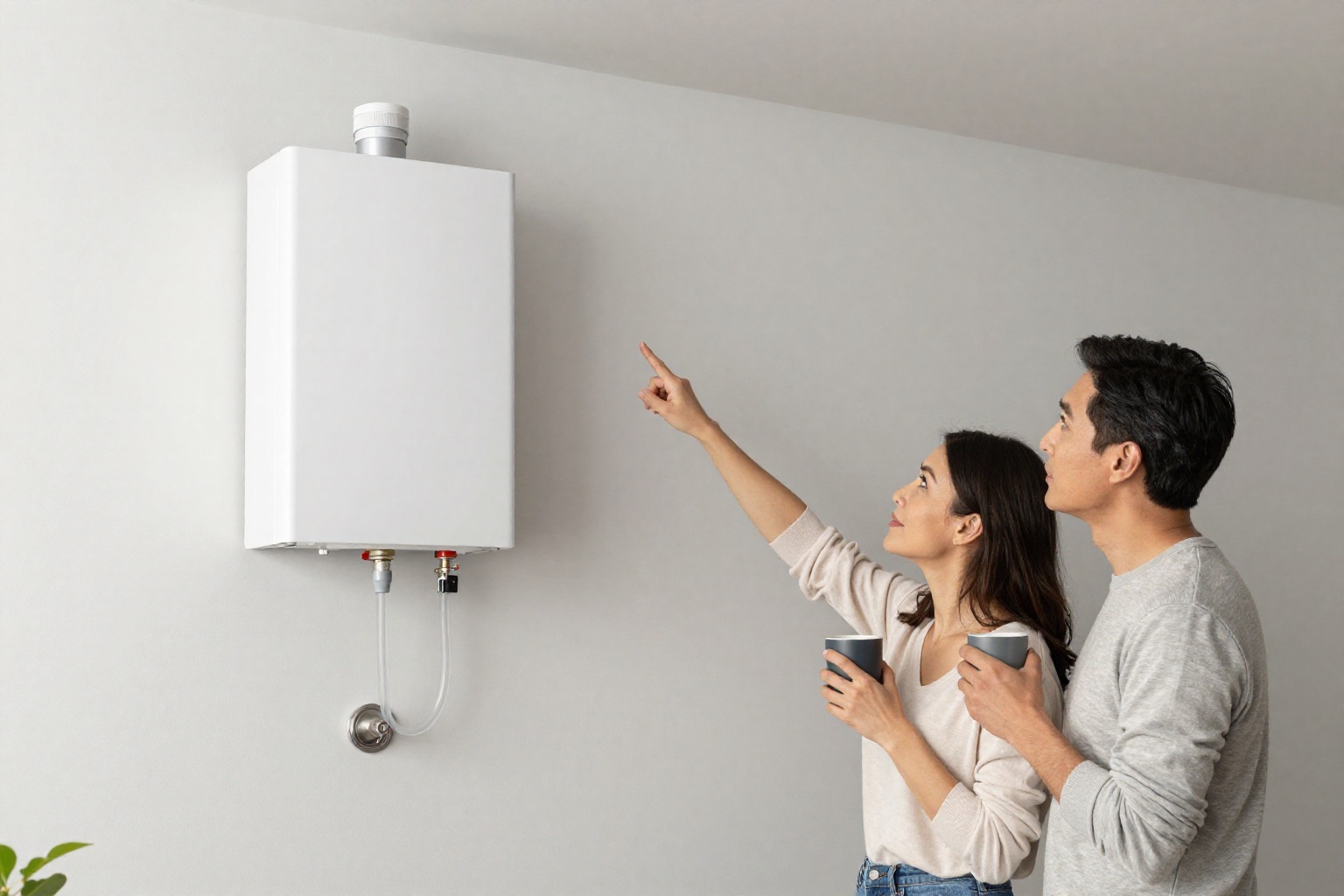
A condensing tankless water heater adds a second heat exchanger that cools the exhaust until its water vapour condenses, so it reaches more than 90 % efficiency where a non-condensing unit stays around 80 %. The trade-off is a slightly acidic condensate that must be drained and usually neutralised. In return the cool exhaust can run through PVC, while a non-condensing unit needs hot-exhaust vent pipe such as Category III stainless steel.
Affiliate disclosureAs an Amazon Associate we earn from qualifying purchases made through links on this page. Commissions never change our ratings.
The difference in one table
| Non-condensing | Condensing | |
|---|---|---|
| Heat exchangers | One (usually copper) | Two: the second, stainless steel, recovers heat from the exhaust |
| Efficiency | About 80 %; around 20 % of the heat leaves through the vent | Above 90 % |
| Exhaust temperature | Hot | Around 100 °F |
| Vent material | High-temperature, corrosion-resistant pipe such as Category III stainless steel | Usually PVC (check the manual for the approved material) |
| Condensate drain | Not needed | Needed; the condensate is slightly acidic (pH 3–5) and a neutraliser is recommended |
| ENERGY STAR (UEF ≥ 0.95) | Out of reach | Possible, and in practice the only gas units that qualify |
| Price of the heater | Lower | Higher |
The efficiency figures come from the Department of Energy’s Building America guide, the heat exchanger description from A. O. Smith. In practice the stated UEF on listings follows the same split: non-condensing gas units in our catalog state 0.81 to 0.82, condensing ones 0.93 to 0.98.
Is a condensing tankless water heater worth it?
It depends on how much hot water you use and what the install costs, not on the label. A rough way to see it: at the same hot-water output, going from 82 % to 95 % efficiency cuts the gas burned for water heating by about 14 % (82 ÷ 95 = 0.86). For a household that uses a lot of hot water on natural gas, that pays back over the life of a heater. For a cabin used a few weekends a year, it rarely does.
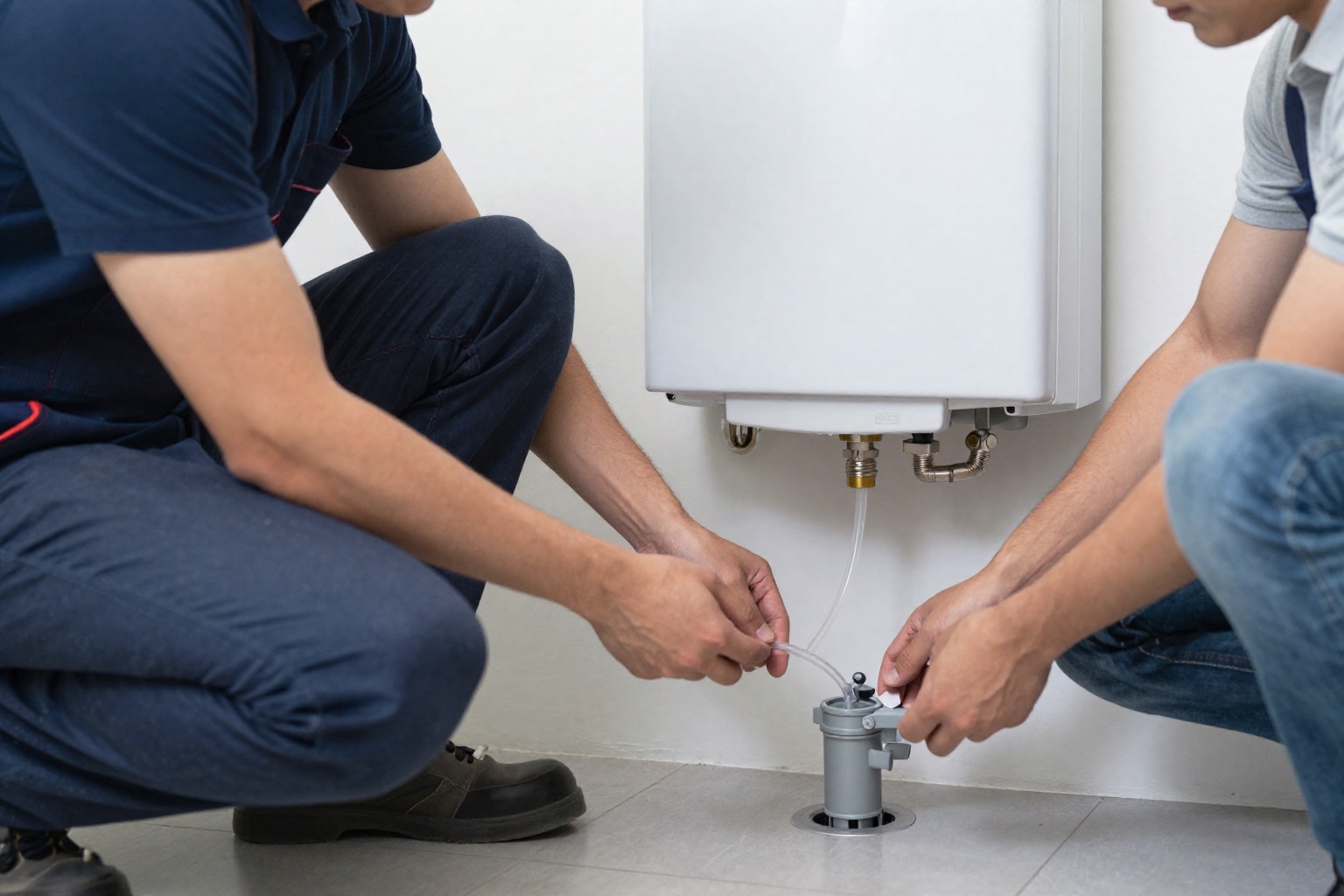
The install can tip the balance either way. Replacing an old tank with a chimney often means new venting anyway, and a condensing unit’s PVC is cheaper to run than stainless steel. But you also need a drain within reach for the condensate, plus the neutraliser kit. Ask the installer to price both options for your house, not just the boxes.
Venting and condensate: what changes in the install
Most gas tankless heaters are direct vent and many have sealed combustion: they push the exhaust out through a wall rather than up a chimney. Condensing models are typically vented through a sidewall. Because their exhaust is cool, the vent can be PVC; a non-condensing unit’s exhaust is hot and its condensate can be corrosive, so its vent needs materials rated for that.
- A condensing unit needs a route for the condensate to a drain, and local code decides where it may go.
- A neutraliser stops the acidic condensate from eating drain pipes over time, and it needs its own maintenance.
- A. O. Smith’s installation guide is blunt about old vents: do not reuse the old vent lines.
Energy Star and condensing tankless heaters
ENERGY STAR asks a gas tankless water heater for a UEF of 0.95 or more, at least 2.8 GPM over a 67 °F rise and a warranty of six years on the heat exchanger and five on parts. Only condensing designs reach that efficiency; the Building America guide says condensing water heaters are generally the only products that earn the label. The federal tax credit that used to reward these units covered installs through December 31, 2025, so in 2026 the label is a guide to efficiency, not a tax break. Local utility rebates may still exist. Our Energy Star guide lists the units in our catalog that state a high enough UEF.
Common mistakes when comparing the two
- Comparing UEF across fuels or sizes. The Department of Energy notes that a UEF can only be compared with heaters in the same usage bin.
- Forgetting the drain. No floor drain or condensate pump route near the planned spot can add real cost to a condensing install.
- Assuming condensing means more hot water. Flow still comes from the burner input and your temperature rise. A 160,000 BTU/h condensing unit gives less hot water than a 199,000 BTU/h one.
- Reusing an old tank’s vent. A. O. Smith says not to reuse the old vent lines, whichever type you buy.
Which of our rated heaters fits which case
- Rinnai RU199iN Condensing (rated 7.8/10): condensing, natural gas, indoor, listed at up to 11 GPM. Our top condensing pick for a whole house on natural gas.
- Rinnai RX160iN Condensing Smart Sense (rated 6.8/10): condensing with a stated UEF of 0.97, a smaller burner and up to 9 GPM on the listing. Good where efficiency matters more than peak flow.
- Rheem RTGH 8.4 GPM Natural Gas Indoor (rated 7.3/10): condensing, 157,000 BTU/h according to the listing. A lighter choice for one to two bathrooms.
- MIZUDO 199,000 BTU Natural Gas Indoor (rated 9.2/10): non-condensing, 199,000 BTU/h. The pick if you want the most burner for the money and the install suits a non-condensing vent.
The full list, with flow and stated efficiency side by side, is in our ranking of the best high-efficiency condensing tankless water heaters.
Our rated picks
The three best-rated models of our ranking Best High-Efficiency Condensing Tankless Water Heaters in 2026, from the buyer review record and the listed specs.
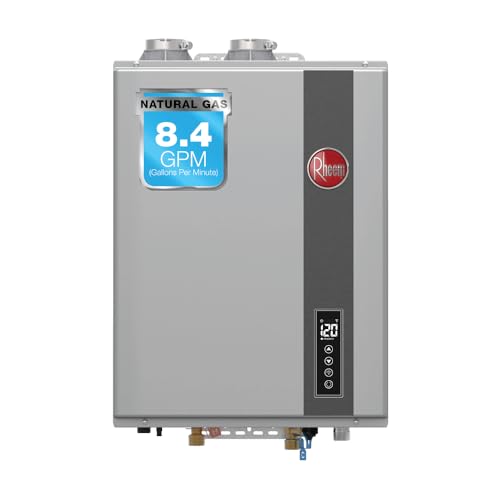

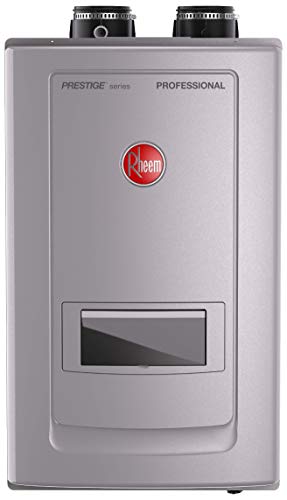
Product images: Amazon listings
Rankings for this question
Common questions
What is the difference between condensing and non-condensing tankless water heaters?
A condensing unit has a second heat exchanger that recovers heat from the exhaust, reaching over 90 % efficiency with PVC venting and a condensate drain. A non-condensing unit has one heat exchanger, runs around 80 % and needs high-temperature vent pipe.
Is a condensing tankless water heater worth it?
Usually for a household with high hot-water use on gas, because it burns roughly 14 % less gas than an 82 % unit for the same hot water. For light use, or when no drain is near the heater, a non-condensing unit is often the cheaper overall choice.
Do condensing tankless water heaters need a drain?
Yes. The condensate is slightly acidic (about pH 3 to 5), so it is piped to a drain allowed by local code, usually through a neutraliser.
Can a non-condensing tankless water heater be vented with PVC?
No. Its exhaust is hot and can be corrosive, so it needs a vent rated for it, such as Category III stainless steel, as specified in the manual.
Sources
- PNNL Building America Solution Center (U.S. DOE) — Gas-Fired Tankless Water Heaters (consulted Nov 2026)
- A. O. Smith — Tankless Water Heater Installation Guide (consulted Nov 2026)
- ENERGY STAR — Water Heater Key Product Criteria (consulted Nov 2026)
- Internal Revenue Service — Energy Efficient Home Improvement Credit (consulted Nov 2026)
- U.S. Department of Energy, Energy Saver (archived May 18, 2026) — Estimating Costs and Efficiency of Storage, Demand, and Heat Pump Water Heaters (consulted Nov 2026)