Indoor vs outdoor tankless water heater: which one fits your house?
An outdoor tankless heater saves the indoor vent run but needs a climate, or freeze protection, that suits it; an indoor unit needs a vent route and combustion air. The exact model's approved location decides, never a sheltered wall or a shared family name.

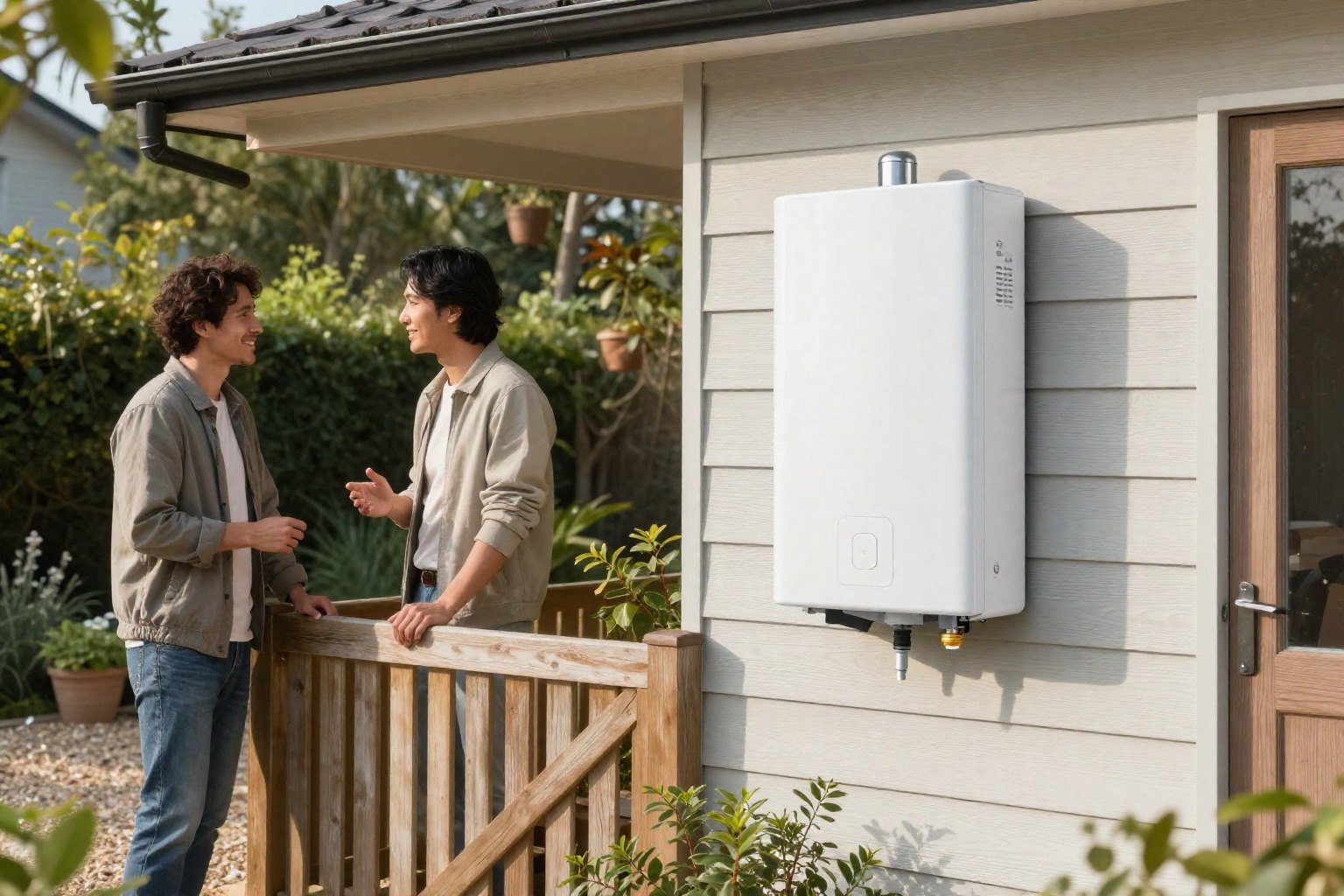
An indoor tankless water heater is a sealed-combustion model vented through a wall or roof and kept inside the heated envelope; an outdoor model mounts on an exterior wall and vents straight into the open air, so it needs no vent pipe. Outdoor units save the venting and the floor space but have to fight freezing: the Department of Energy’s Building America guide says they typically belong only in the warmest climate zones, 1 and 2. They are different models, so buy the version approved for the spot you have.
Affiliate disclosureAs an Amazon Associate we earn from qualifying purchases made through links on this page. Commissions never change our ratings.
Indoor vs outdoor at a glance
| Indoor model | Outdoor model | |
|---|---|---|
| Venting | Vent pipe through a wall or roof (direct vent, often sealed combustion) | No vent pipe: exhaust leaves the cabinet outdoors |
| Where it suits | Any climate | Warm climates; the Building America guide says climate zones 1 and 2 |
| Freeze risk | Low inside a heated space | High: relies on built-in freeze protection, which uses power, plus heat trace on the pipes |
| Space indoors | A wall in a utility room, garage or basement | None |
| Combustion air and CO | Sealed combustion keeps exhaust out of the room when vented as the manual says | Exhaust outdoors, but keep it away from windows, doors and air intakes |
| Condensing options | Many | Fewer; most outdoor units in our catalog are non-condensing |
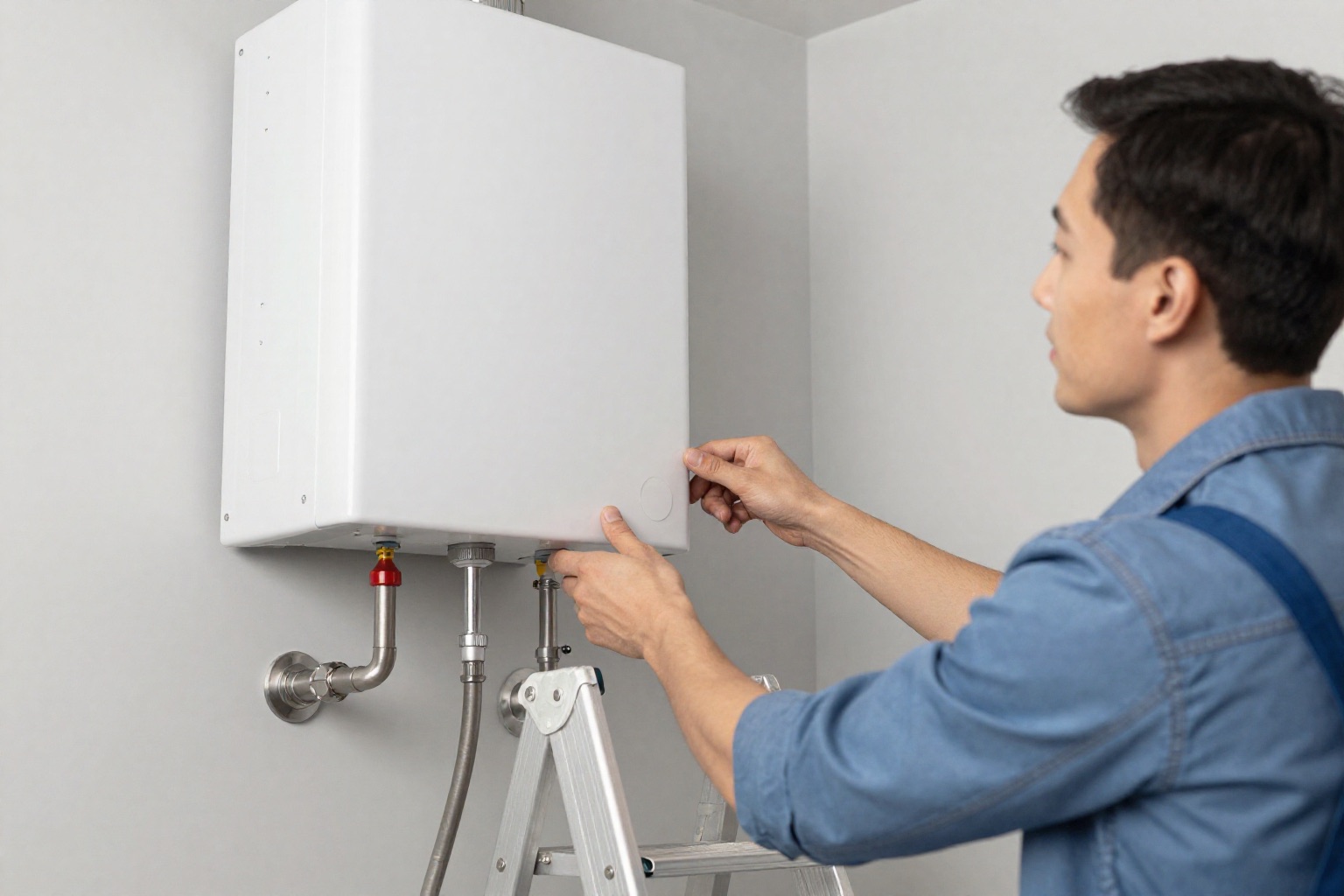
When an outdoor tankless heater makes sense
Outdoor units shine where winters are mild and space inside is tight: a house on a slab in the South, a home where the old tank sat in a closet with no easy vent route, a pool house. You skip the vent pipe, which is often the costly part of a gas tankless install, and you free up the floor space.
The catch is cold. The Building America guide is specific: the climate needs to be warm year-round to avoid freezing, so outdoor units typically belong in climate zones 1 and 2. Many outdoor models protect themselves with heaters inside the cabinet, but those use energy and only work with power, and the pipes to and from the unit need their own freeze protection, such as heat trace. A power cut on a frosty night can leave an outdoor unit exposed, which is why several outdoor listings in our catalog describe draining the unit.
When an indoor model is the better buy
Anywhere it freezes hard, indoor is the default. An indoor unit sits in a garage, basement or utility room and vents through the wall. Most gas tankless heaters are direct vent and many have sealed combustion, which draws air from outside through one pipe and pushes exhaust out through another. Condensing models, the most efficient ones, are mostly built for indoor installs; they vent cool exhaust through PVC and need a condensate drain, as our condensing guide explains.
Indoor means venting has to be right. A. O. Smith reminds installers to respect the minimum clearances in the manual, keep vents short and away from air intakes, and not to reuse old vent lines. The EPA asks for fuel-burning appliances, gas water heaters included, to be inspected by a trained professional and for vents to be connected and unblocked.
Outdoor is a model, not a location
- An indoor unit hung outside is not weatherproof and has no outdoor exhaust design.
- An outdoor unit brought inside has no vent connection; its exhaust would stay in the room. Never do this.
- Portable camping heaters are a third category again: outdoor use only, never in a tent, RV, shed or garage.
- Some models come in both versions under one family name. Check the exact model letters and the listing before you order, and keep the manual for the inspector.
Common mistakes with outdoor tankless heaters
- Forgetting the pipes. The unit’s freeze protection does not protect the water lines outside its cabinet.
- Unplugging it in winter. Built-in freeze protection needs power; a dead outlet on a freezing night leaves the unit unprotected, and Rinnai’s warranty excludes freeze damage.
- Mounting it under a window or next to a door. Exhaust needs the clearances in the manual.
- Assuming the label means any climate. “Outdoor” means the cabinet is built for weather, not that your winter is mild enough.
For outdoor propane units, we quote each model’s freeze protection from its listing, including when it asks you to drain it.
Which of our rated heaters fits indoors or outdoors
- Indoors, natural gas: MIZUDO 199,000 BTU Natural Gas Indoor (rated 9.2/10), 199,000 BTU/h according to the listing, the top of our indoor natural gas ranking.
- Outdoors, propane: FOGATTI Outdoor Propane Tankless (rated 9.1/10), the top of our outdoor propane ranking, 120,000 BTU/h according to the listing.
- Outdoors, propane, more flow: APUS 190,000 BTU Propane Outdoor (rated 6.9/10), 190,000 BTU/h on the listing, for a larger warm-climate house.
Our rated picks
The three best-rated models of our ranking Best Outdoor Propane Tankless Water Heaters in 2026, from the buyer review record and the listed specs.


Product images: Amazon listings
Rankings for this question
Common questions
Is it better to have an indoor or outdoor tankless water heater?
Indoor in any climate with real winters; outdoor in warm climates where it saves the vent pipe and indoor space. The Building America guide says outdoor units typically suit only climate zones 1 and 2.
Can an outdoor tankless water heater freeze?
Yes. Many outdoor models have built-in freeze protection, but it needs power and uses energy, and the pipes outside the cabinet need their own protection such as heat trace.
Can I install an outdoor tankless water heater indoors?
No. An outdoor model has no vent connection, so its exhaust would stay in the room. Buy the indoor version, which is designed to be vented.
Does an outdoor tankless water heater need venting?
No vent pipe, but it still needs the clearances from windows, doors and air intakes that its manual specifies.
Sources
- PNNL Building America Solution Center (U.S. DOE) — Gas-Fired Tankless Water Heaters (consulted Nov 2026)
- A. O. Smith — Tankless Water Heater Installation Guide (consulted Nov 2026)
- U.S. EPA — Protect Your Family and Yourself from Carbon Monoxide Poisoning (consulted Nov 2026)
- Rinnai America — SENSEI residential tankless water heater limited warranty (PDF) (consulted Nov 2026)