Tankless water heater sizing: how many GPM do you need?
You need the GPM of every fixture that runs at the same time, delivered at your winter temperature rise: two showers alone are about 4.0 GPM on our calculator's figures. A listing's maximum GPM is usually quoted at a milder rise, so read the maker's chart at yours.

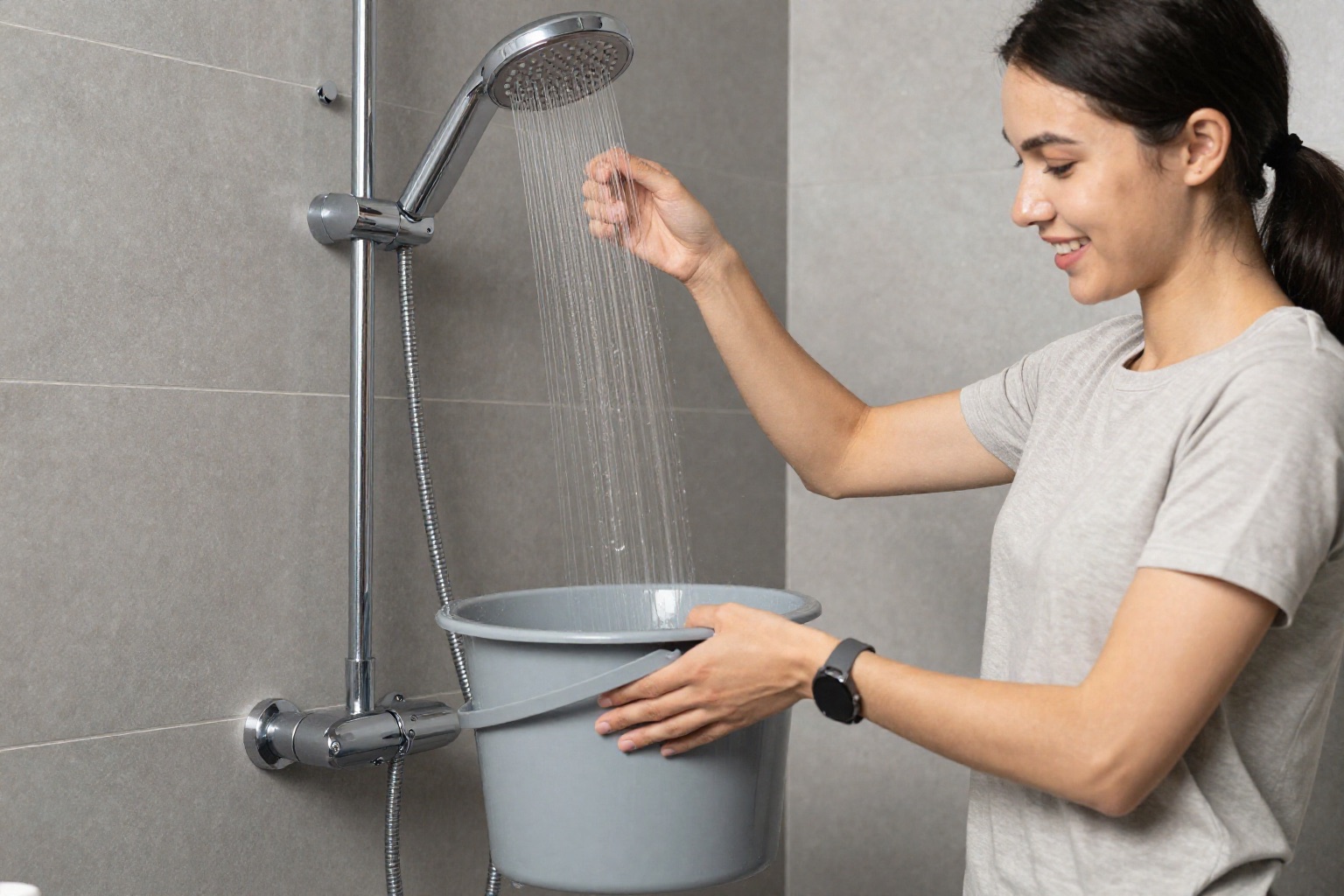
Most homes need a tankless water heater that delivers 3 to 6 GPM at their winter temperature rise: about 3.25 GPM for one shower and a faucet, and 5 to 6 GPM for two showers at once. The rise is your tap temperature minus the incoming water, around 70 °F if you assume 50 °F water and 120 °F at the tap. Read every GPM figure at that rise, never the headline number on the box.
Affiliate disclosureAs an Amazon Associate we earn from qualifying purchases made through links on this page. Commissions never change our ratings.
How many GPM do you need?
| What runs at once | GPM needed | With WaterSense 2.0 GPM heads |
|---|---|---|
| One shower | 2.5 | 2.0 |
| One shower + bathroom faucet | 3.5 | 3.0 |
| One shower + kitchen faucet | 4.0 | 3.5 |
| Two showers | 5.0 | 4.0 |
| Two showers + dishwasher | 7.0 | 6.0 |
Fixture flows are from Rheem’s sizing sheet (bathroom faucet 1 GPM, kitchen faucet 1.5, dishwasher 2) and the EPA (standard showerhead 2.5 GPM, WaterSense 2.0 or less). The DOE example of a 0.75 GPM faucet and a 2.5 GPM shower gives its minimum of 3.25 GPM. Be honest about your mornings: if two showers never overlap, don’t pay for 7 GPM.
Temperature rise: the number that changes everything
A tankless heater is rated by the temperature rise it can manage at a given flow. The colder your water arrives, the fewer gallons it can heat. The Department of Energy says to assume 50 °F incoming water if you don’t know, and 120 °F at the tap, a 70 °F rise; for a dishwasher without its own heater, 140 °F means a 90 °F rise. You can measure yours with a thermometer under a cold tap in winter.
Groundwater in the US runs from about 37 °F in the far north to 77 °F in the far south on Rheem’s zone map. That is the difference between a heater that runs two showers and one that runs half of one.
The sizing math, gas and electric
One Btu heats one pound of water by 1 °F, and a gallon of water weighs about 8.3 lb, so heating 1 GPM by 1 °F takes about 500 Btu per hour. That gives two working formulas:
- Gas: GPM = burner input (BTU/h) × efficiency ÷ (500 × rise). A 199,000 BTU/h unit at 82 % gives about 4.7 GPM at a 70 °F rise; at 93 % about 5.3 GPM.
- Electric: GPM = kW × 6.83 ÷ rise, the formula Stiebel Eltron prints on its spec sheet. An 18 kW unit gives about 1.8 GPM at a 70 °F rise; 36 kW about 3.5 GPM.
| Heater | 45 °F rise (warm South) | 70 °F rise (DOE default) | 80 °F rise (cold North) |
|---|---|---|---|
| Gas 199,000 BTU/h, 82 % | 7.3 GPM | 4.7 GPM | 4.1 GPM |
| Gas 199,000 BTU/h, 93 % (condensing) | 8.2 GPM | 5.3 GPM | 4.6 GPM |
| Gas 120,000 BTU/h, 82 % | 4.4 GPM | 2.8 GPM | 2.5 GPM |
| Electric 18 kW | 2.7 GPM | 1.8 GPM | 1.5 GPM |
| Electric 27 kW | 4.1 GPM | 2.6 GPM | 2.3 GPM |
| Electric 36 kW | 5.5 GPM | 3.5 GPM | 3.1 GPM |
These are physics estimates, not a maker’s rating; always confirm against the chart in the manual of the exact model. Our flow-rate calculator runs the same numbers for your fixtures.
Why the box GPM misleads
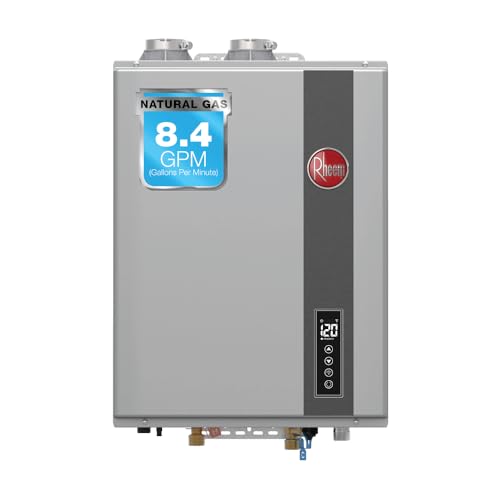
A listing that says 10 or 11 GPM is quoting the flow at a small rise in warm water. Plug the same burner into a 70 °F rise and you get roughly half. The DOE’s rule of thumb is about 5 GPM for gas and 2 GPM for electric at a 70 °F rise, which matches the math above. When two listings both claim 8 GPM, compare their burner input in BTU/h or their power in kW instead: that is the number that actually heats water.
Also check the low end. The Building America guide notes that not every unit fires below 0.5 GPM, which matters at a bathroom sink. Rheem’s RTEX starts at 0.3 GPM, Stiebel’s larger Tempras at 0.77 GPM.
Common sizing mistakes
- Sizing for July. Use your coldest inlet temperature.
- Counting every fixture in the house. Only the ones that run together matter.
- Forgetting the gas supply. The size and pressure of the gas line can decide whether a large burner works at all; the installer checks both.
- Oversizing electric beyond the panel. A 36 kW unit needs about 150 A; check our electrical requirements guide first.
Which of our rated heaters covers which flow
- Two showers in a cold climate, natural gas: MIZUDO 199,000 BTU Natural Gas Indoor (rated 9.2/10), 199,000 BTU/h according to the listing, about 4.7 GPM at a 70 °F rise by the math above.
- Same flow, more of the gas turned into hot water: Rinnai RU199iN Condensing (rated 7.8/10), condensing.
- Outdoor propane for a smaller house: FOGATTI Outdoor Propane Tankless (rated 9.1/10), 120,000 BTU/h according to the listing, about 2.8 GPM at a 70 °F rise at 82 % efficiency: one shower plus a sink.
- One shower on electric: Rheem 18 kW Electric, 240V (rated 9.3/10), 18 kW.
All of them sit in our whole-house ranking. For outdoor propane units we convert each burner into winter flow in the outdoor propane ranking.
Our rated picks
The three best-rated models of our ranking Best Whole-House Tankless Water Heaters in 2026: Gas and Electric, from the buyer review record and the listed specs.


Product images: Amazon listings
Rankings for this question
Common questions
How many GPM tankless water heater do I need?
Add the flow of fixtures used at the same time: about 3.25 GPM for a shower and a faucet, 5 GPM for two standard showers, 7 GPM with a dishwasher too. The heater must reach that at your winter temperature rise.
How many GPM for a tankless water heater for a family of four?
Usually 5 to 6 GPM at the winter rise, enough for two showers and a faucet. With WaterSense showerheads, about 4 to 5 GPM.
What temperature rise should I use for sizing?
Your tap temperature, typically 120 °F, minus your coldest incoming water. If you do not know it, the DOE suggests 50 °F incoming water, which gives a 70 °F rise.
Can a tankless water heater deliver more GPM?
Only by lowering the rise or the demand: warmer inlet water, low-flow fixtures, or a second heater in parallel. A heater cannot exceed what its burner or elements can heat.
Sources
- U.S. Department of Energy, Energy Saver (archived May 31, 2026) — Sizing a New Water Heater (consulted Nov 2026)
- Rheem — Professional Classic RTEX tankless electric water heaters, specification sheet (PDF) (consulted Nov 2026)
- U.S. EPA WaterSense — Showerheads (consulted Nov 2026)
- Stiebel Eltron USA — Tempra Trend and Plus engineering specification sheet (PDF) (consulted Nov 2026)
- U.S. Energy Information Administration — British thermal units (Btu) (consulted Nov 2026)
- U.S. Geological Survey — Water Density (consulted Nov 2026)
- PNNL Building America Solution Center (U.S. DOE) — Gas-Fired Tankless Water Heaters (consulted Nov 2026)