Point of use vs whole house tankless water heater: which do you need?
A point-of-use tankless heater serves one sink or shower close by, while a whole-house unit is sized for every fixture that can run at once. If the problem is a long wait at one far-off tap, point of use; if hot water runs out when two showers overlap, whole house.

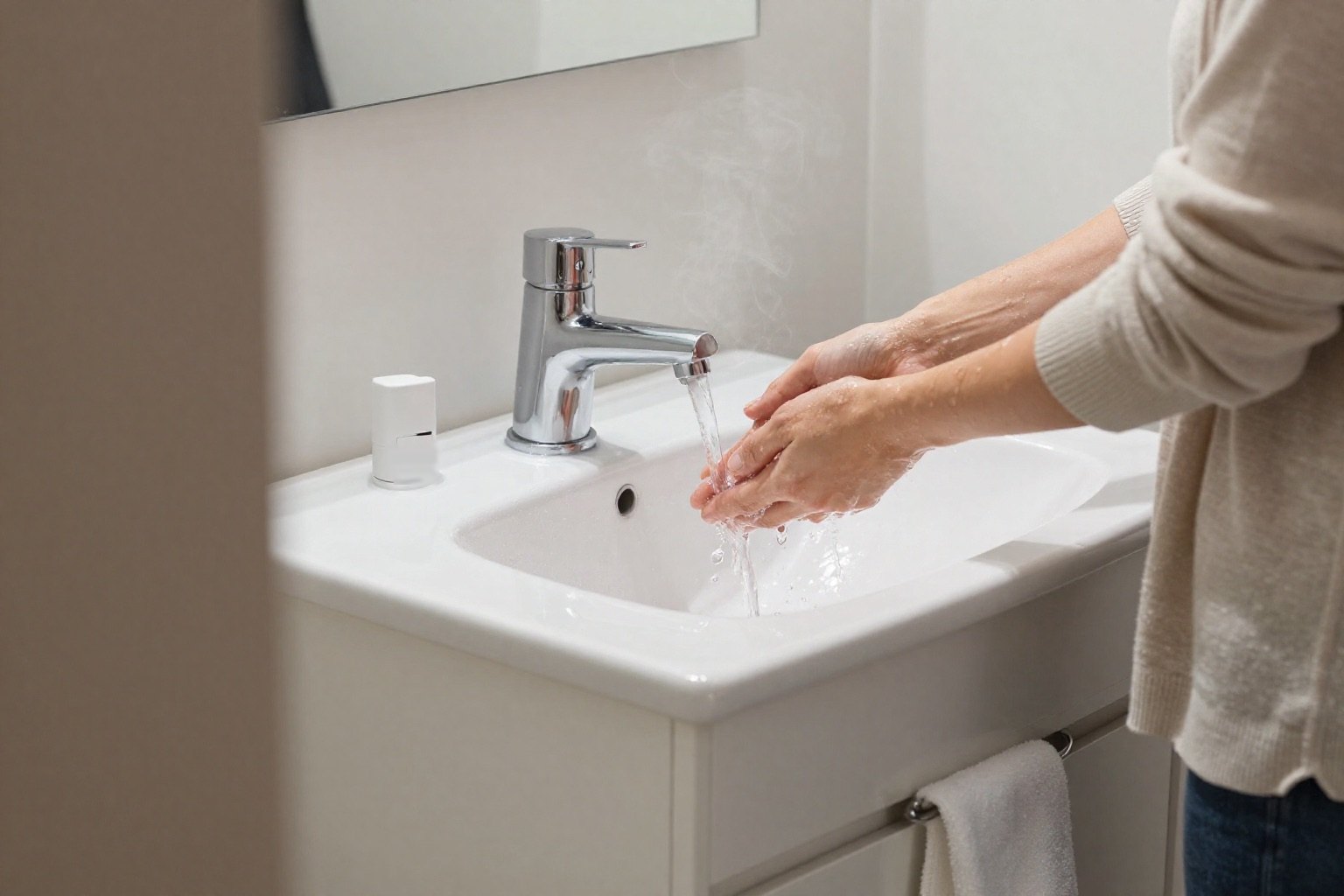
A point-of-use tankless water heater sits under or next to one sink or shower and heats only that fixture, usually with 3.5 to 13 kW of electric power; a whole-house unit sits in one spot and feeds every tap at once, which takes 18 to 36 kW electric or a 120,000 to 200,000 BTU/h gas burner. Point of use fixes a long wait or a remote bathroom; whole house fixes running out of hot water. Choose by the problem you actually have.
Affiliate disclosureAs an Amazon Associate we earn from qualifying purchases made through links on this page. Commissions never change our ratings.
Point of use vs whole house: the differences
| Point of use | Whole house | |
|---|---|---|
| Serves | One sink, one bathroom, one appliance | Every fixture in the house |
| Typical size | 3.5 kW on 120 V up to about 13 kW on 240 V | 18–36 kW electric, or 120,000–200,000 BTU/h gas |
| Electrical feed | 29 A at 120 V for 3.5 kW; 46–54 A on 240 V for 11–13 kW (Rheem) | 75–150 A on 2–4 breakers, 150–300 A service |
| Wait for hot water | Seconds: no long pipe run | Depends on the distance from the heater |
| Hot water per minute | Small: a 3.5 kW unit raises 0.5 GPM by about 48 °F | A gas unit about 5 GPM at a 70 °F rise (DOE) |
| Install | Often simple, on its own circuit | Gas line, vent or a large electrical upgrade |

What a point-of-use heater can do
The Department of Energy lists remote bathrooms, hot tubs and boosting a dishwasher or washing machine among the jobs demand heaters do well, and notes that one heater at each outlet can save even more energy than a central unit. The limit is power. Rheem’s own chart for its point-of-use RTEX models shows it plainly:
| Model | Power | At 0.5 GPM | At 1.0 GPM | At 1.5 GPM |
|---|---|---|---|---|
| RTEX-04 | 3.5 kW, 120 V | 48 °F | – | – |
| RTEX-11 | 11 kW, 240 V | – | 75 °F | 50 °F |
| RTEX-13 | 13 kW, 240 V | – | 89 °F | 59 °F |
So a 120 V unit warms a low-flow hand sink; it will not run a kitchen faucet at full flow in winter, and no 120 V unit runs a shower. For a shower you are into 13 kW or more on 240 V. Our under-sink 120 V guide goes through these small units one by one.
When you need a whole-house unit instead
If the complaint is that hot water runs out when two showers overlap, or that the shower goes cold when the dishwasher starts, a point-of-use heater at one tap will not fix it. That is a capacity problem, and it needs a whole-house heater sized on simultaneous flow and your winter temperature rise, the way the Department of Energy describes. Our sizing guide gives the numbers.
Whole-house electric units need serious electrical capacity: Rheem’s 18 kW RTEX draws 75 A, its 36 kW model 150 A, with a 150 A to 300 A service. Gas units need a gas line sized for up to 199,900 BTU/h. Check our electrical requirements guide before you commit to electric.
Using both: a central heater plus a booster
Plenty of houses mix the two. A central tank or tankless heater handles the bathrooms, and a small point-of-use unit sits under a far kitchen sink or in a garage workshop where the pipe run is long. The DOE also mentions separate demand heaters for big hot-water appliances such as a washing machine. That keeps the central heater smaller and the far tap quick, without a recirculation pump.
Common mistakes
- Buying a 120 V unit for a shower. At 3.5 kW it cannot heat shower flow.
- Plugging into the existing outlet. A 3.5 kW unit draws about 29 A; Rheem specifies a 30 A breaker and 10 AWG wire for it, far more than a normal outlet circuit.
- Ignoring the activation flow. A very low-flow aerator may not switch the heater on at all.
- Fixing a capacity problem at one tap. If the whole house runs out, size a whole-house heater.
Which of our rated heaters for which job
- One hand sink on 120 V: Rheem 3.5 kW Point-of-Use, 120V (rated 7/10), 3.5 kW.
- One sink or a low-flow fixture on 240 V: Stiebel Eltron DHX 8-2 Trend, 7.2 kW (rated 6.8/10), 7.2 kW according to the listing.
- The whole house on electric: Rheem 18 kW Electric, 240V (rated 9.3/10), 18 kW, one shower at a time in most climates.
- The whole house on gas: MIZUDO 199,000 BTU Natural Gas Indoor (rated 9.2/10), 199,000 BTU/h.
More in our whole-house ranking.
Our rated picks
The three best-rated models of our ranking Best Whole-House Tankless Water Heaters in 2026: Gas and Electric, from the buyer review record and the listed specs.


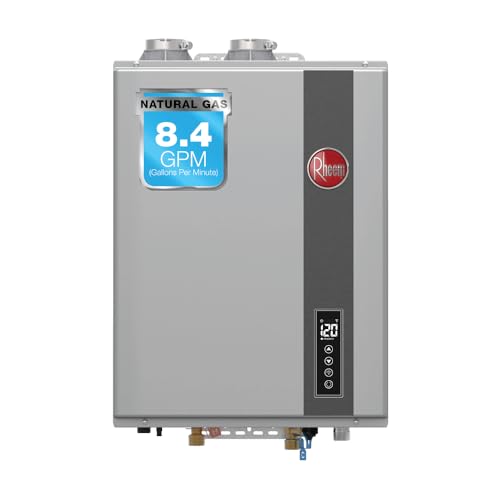
Product images: Amazon listings
Rankings for this question
Common questions
What is the difference between a point of use and a whole house tankless water heater?
A point-of-use unit heats one fixture close by, with a small electric element; a whole-house unit sits centrally and supplies every tap at once, with 18 to 36 kW electric or a large gas burner.
What does point of use water heater mean?
A water heater installed at or near the fixture it serves, such as under a sink, so hot water arrives in seconds without a long pipe run.
Is a point of use water heater enough for a shower?
Only a large 240 V unit, around 13 kW or more. A 120 V 3.5 kW unit raises 0.5 GPM by about 48 °F, which suits a hand sink, not a shower.
Can I use point-of-use heaters instead of a whole house unit?
Yes, one per bathroom and kitchen, if each location has its own circuit with the amps it needs. Count the total electrical load first; several 13 kW units add up fast.
Sources
- U.S. Department of Energy, Energy Saver (archived June 30, 2026) — Tankless or Demand-Type Water Heaters (consulted Nov 2026)
- Rheem Canada — Chauffe-eau sans réservoir électriques Professional Classic, fiche technique (PDF) (consulted Nov 2026)
- Rheem — Professional Classic RTEX tankless electric water heaters, specification sheet (PDF) (consulted Nov 2026)
- U.S. Department of Energy, Energy Saver (archived May 31, 2026) — Sizing a New Water Heater (consulted Nov 2026)
- PNNL Building America Solution Center (U.S. DOE) — Gas-Fired Tankless Water Heaters (consulted Nov 2026)