Natural gas vs propane tankless water heater: which fuel fits?
Buy the version built for the fuel your property actually gets: natural gas from a utility line, or propane from a tank. The two burn differently, so a natural gas unit and its propane twin are not interchangeable, whatever the photos suggest.

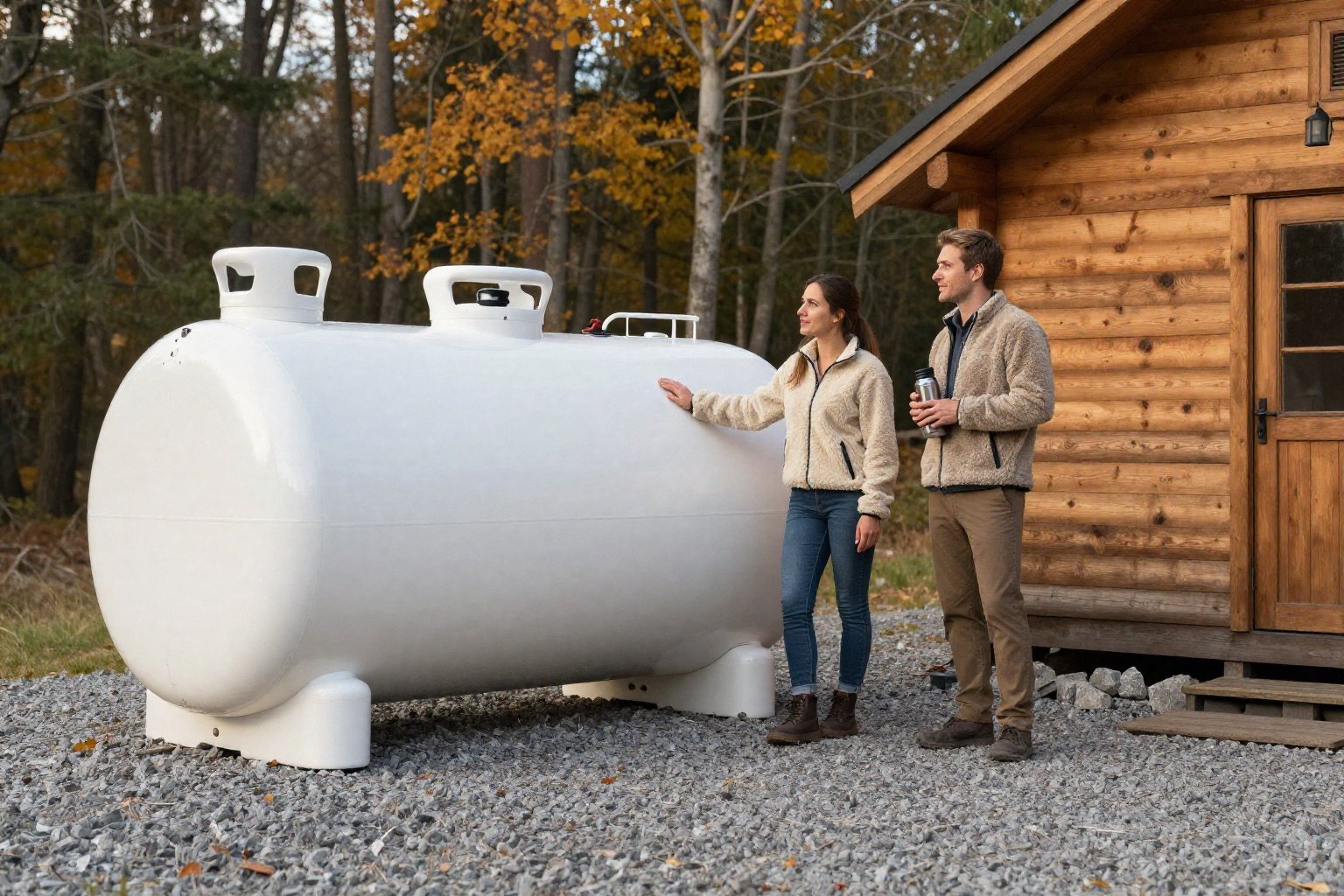
Natural gas and propane tankless water heaters work the same way, but each is built for one fuel: you buy the version that matches the gas your house gets, and conversion is a job for a licensed pro with the maker’s kit, if the model allows it at all. Propane carries 91,452 Btu per gallon against 1,036 Btu per cubic foot of natural gas, so a 199,000 BTU/h burner uses about 2.2 gallons of propane, or about 192 cubic feet of natural gas, for every hour it fires.
Affiliate disclosureAs an Amazon Associate we earn from qualifying purchases made through links on this page. Commissions never change our ratings.
Natural gas vs propane: the comparison
| Natural gas | Propane | |
|---|---|---|
| Supply | Utility pipeline and meter | Tank or cylinders, delivered or swapped |
| Energy content (EIA) | 1,036 Btu per cubic foot; 100,000 Btu per therm | 91,452 Btu per gallon |
| Fuel at 199,000 BTU/h, per hour of firing | About 192 cu ft (2 therms) | About 2.2 gallons |
| Fuel at 120,000 BTU/h, per hour of firing | About 116 cu ft | About 1.3 gallons |
| Typical buyer | Suburban and city homes with gas service | Rural homes, cabins, off-grid and outdoor setups |
| Heater | NG model | LP model; not interchangeable without an approved conversion |

Why the heater must match the fuel
The burner, gas valve and orifices are set for one gas. A natural gas unit on propane, or the reverse, will not burn correctly, which is a safety problem and not just a performance one. Rinnai lists “incorrect gas type” among the installation faults its warranty does not cover. Some model families come in both versions with nearly the same name, so check the letters at the end of the model (Rinnai uses N and P, for instance) and the fuel line on the listing before you order.
Converting between fuels is only possible with a kit the manufacturer approves for that exact model, fitted by a licensed gas professional. Many buyers simply order the right version. Our guide gives no conversion instructions on purpose.
What propane costs you to run
On propane, the fuel math is easy to do yourself: divide the burner’s input in BTU/h by 91,452 to get gallons per hour at full fire. A 120,000 BTU/h outdoor unit uses about 1.3 gallons for each hour of full firing; a whole-house 199,000 BTU/h unit about 2.2. A ten-minute shower at full fire on the larger unit is roughly a third of a gallon. Multiply by your local price per gallon and compare with natural gas at your price per therm (100,000 Btu).
Propane comes by truck or cylinder, and in a house without a gas main it is often the only way to get gas-level hot water flow. Our outdoor propane ranking runs the gallons per hour for each of its heaters, from a 20 lb cylinder to a large tank.
Supply checks before you buy
- Natural gas: the meter and the line to the heater must deliver the full burner input with the other appliances running; the Building America guide notes the line from the street sometimes has to be upsized.
- Propane: the tank, regulator and line must deliver the full input too; a small cylinder that works for a camp shower cannot feed a 199,000 BTU/h house heater.
- Venting and location are the same questions for both fuels: indoor models are vented, outdoor models need their clearances. See our indoor vs outdoor guide.
- Efficiency works the same way on both: condensing versions of either fuel reach the highest UEF.
Common mistakes
- Ordering the wrong version. Same family, wrong fuel letter.
- Planning a DIY conversion. Wrong gas type is excluded from warranty cover and is a combustion hazard.
- Undersizing the propane supply. Gallons per hour at full fire tell you what the tank and regulator must deliver.
- Comparing fuel prices per unit, not per Btu. A gallon of propane and a therm of natural gas carry different amounts of heat.
Which of our rated heaters for each fuel
- Natural gas, indoor: MIZUDO 199,000 BTU Natural Gas Indoor (rated 9.2/10), 199,000 BTU/h according to the listing.
- Natural gas, condensing: Rinnai RU199iN Condensing (rated 7.8/10).
- Propane, outdoor: FOGATTI Outdoor Propane Tankless (rated 9.1/10), 120,000 BTU/h, about 1.3 gallons per hour at full fire.
- Propane, outdoor, with a larger review record: Ranein 130,000 BTU Propane Outdoor (rated 7.5/10), 130,000 BTU/h on the listing.
See also our gas tankless ranking, which mixes both fuels.
Our rated picks
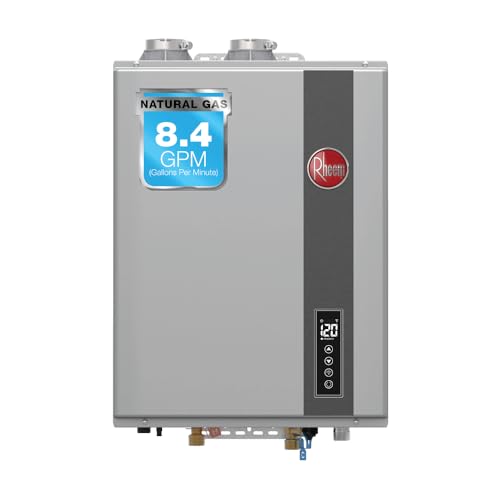
The three best-rated models of our ranking Best Gas Tankless Water Heaters in 2026, from the buyer review record and the listed specs.


Product images: Amazon listings
Rankings for this question
Common questions
Can a natural gas tankless water heater run on propane?
Not as delivered. It needs a conversion kit approved by the manufacturer for that model, fitted by a licensed gas professional, and many models are simply sold in separate natural gas and propane versions.
Is propane or natural gas cheaper for a tankless water heater?
Compare per Btu: divide your propane price per gallon by 91,452 and your natural gas price per therm by 100,000. The answer depends entirely on local prices.
How much propane does a tankless water heater use?
Burner input divided by 91,452 Btu per gallon: about 1.3 gallons per hour at 120,000 BTU/h and 2.2 gallons per hour at 199,000 BTU/h, only while it fires.
Are propane tankless water heaters as good as natural gas ones?
Yes, for the same burner input they deliver the same hot water; the difference is the fuel supply and its price.
Sources
- U.S. Energy Information Administration — British thermal units (Btu) (consulted Nov 2026)
- Rinnai America — SENSEI residential tankless water heater limited warranty (PDF) (consulted Nov 2026)
- PNNL Building America Solution Center (U.S. DOE) — Gas-Fired Tankless Water Heaters (consulted Nov 2026)
- ENERGY STAR — Water Heater Key Product Criteria (consulted Nov 2026)